Module 1: Regulations & Airspace
PART 107 RULES & PRIVILEGES
ABOUT THIS LESSON
Operating rules, waivers, and pilot responsibilities under 14 CFR Part 107.
WHAT IS PART 107?
Title 14 of the Code of Federal Regulations (14 CFR) Part 107 governs the operation of small unmanned aircraft systems (sUAS) in the United States. It was enacted in August 2016 and establishes the rules that commercial drone pilots must follow. Any drone operation that is not purely recreational requires a Part 107 Remote Pilot Certificate.
- •Applies to drones weighing less than 55 lbs at takeoff (including payload)
- •Covers all non-recreational drone operations
- •Operated by the FAA under the Department of Transportation
OPERATING RULES
Part 107 establishes strict operating limitations that every remote pilot must follow. These rules exist to keep the National Airspace System (NAS) safe for all aircraft — manned and unmanned.
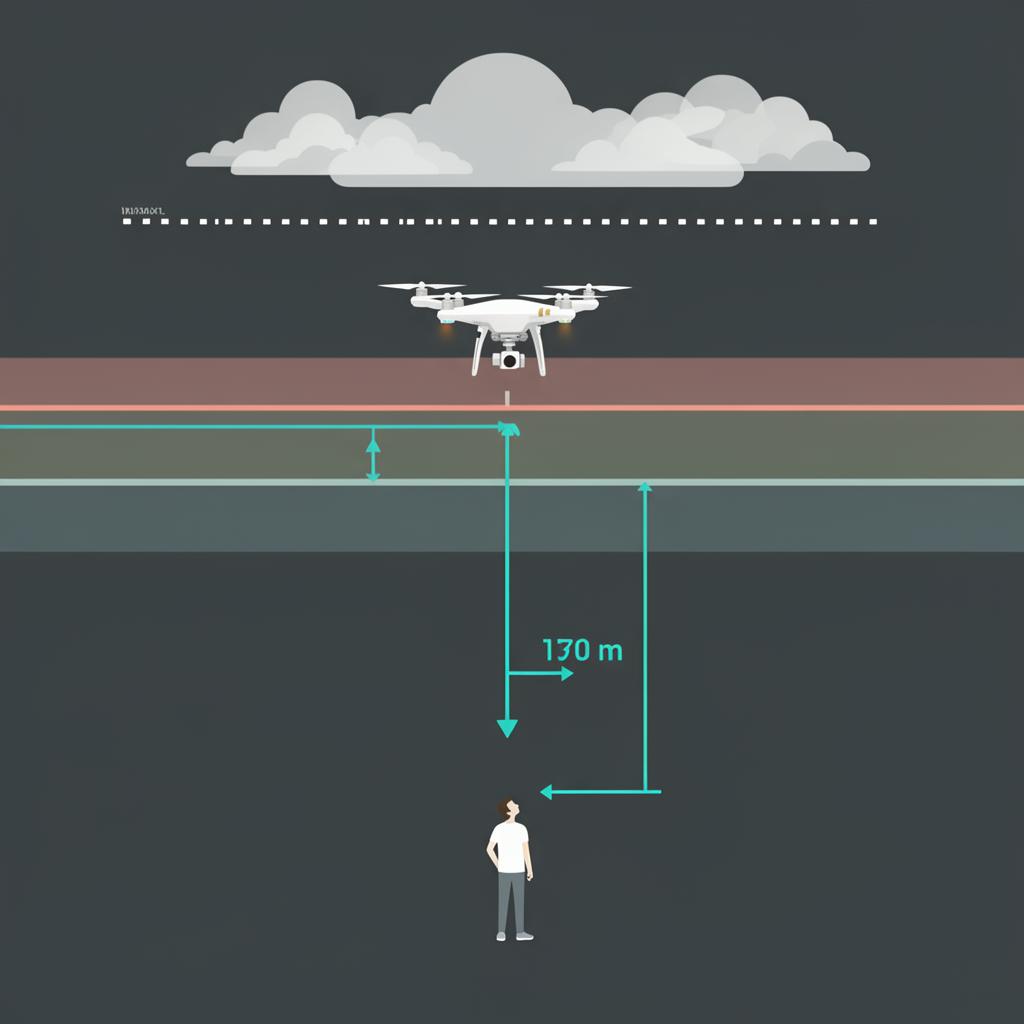
Part 107 operating limits — altitude, cloud clearance, and visual line of sight requirements
- •Maximum altitude: 400 feet above ground level (AGL)
- •Exception: You may fly above 400 ft AGL if within 400 ft of a structure
- •Maximum ground speed: 100 mph (87 knots)
- •Minimum flight visibility: 3 statute miles from the control station
- •Cloud clearance: 500 ft below clouds, 2,000 ft horizontally
- •Must yield right of way to ALL manned aircraft at all times
- •Night operations allowed without a waiver (anti-collision lighting visible for 3 SM required; pilot must complete updated training)
- •Must maintain visual line of sight (VLOS) with the drone at all times
- •No operations over non-participating persons (without proper category)
- •No operations from a moving vehicle unless over sparsely populated areas
Exam Tip
The altitude, speed, visibility, and cloud clearance numbers are tested heavily. Memorize them: 400 ft, 100 mph, 3 SM visibility, 500 ft below / 2,000 ft horizontal from clouds.
FAA Part 107 Summary (PDF)
Official FAA summary of all Part 107 operating rules and limitations.
REMOTE PILOT IN COMMAND (REMOTE PIC) RESPONSIBILITIES
The Remote PIC is the person ultimately responsible for the safe operation of the drone. Even if you designate someone else to manipulate the controls, the Remote PIC bears final authority and responsibility.
- •Must ensure the sUAS does not pose a hazard to people, aircraft, or property
- •Must ensure compliance with all Part 107 rules
- •Can designate a person to manipulate the controls but remains responsible
- •May use a Visual Observer (VO) but the VO is not required
- •Must be able to take direct control of the drone at any time
- •Cannot operate more than one drone at a time (without a waiver)
WAIVERS & EXEMPTIONS
The FAA allows remote pilots to request waivers for certain Part 107 rules when the pilot can demonstrate the operation can still be conducted safely. Waivers are applied for through the FAA DroneZone website.
- •Can waive: altitude limits, VLOS, operations over people, night ops (no longer needed), multiple drones, moving vehicle ops, and more
- •Cannot waive: registration, airspace authorization, hazardous operations, right-of-way rules
- •Waivers require a detailed safety case / risk mitigation plan
- •Processing time is typically 90 days but can vary
Exam Tip
Know which rules CAN and CANNOT be waived. You cannot waive the requirement to yield right of way to manned aircraft or the prohibition against careless/reckless operations.
ACCIDENT REPORTING
Part 107 requires reporting certain accidents to the FAA. Not every incident qualifies — only those meeting specific thresholds.
- •Must report to the FAA within 10 calendar days
- •Reportable: serious injury to any person or loss of consciousness
- •Reportable: damage to any property (other than the drone) exceeding $500
- •Report through the FAA DroneZone or your local FSDO
Exam Tip
Remember the two triggers: serious injury OR $500+ property damage (not counting the drone itself). And the deadline is 10 days.
SECTION QUIZ
1 / 15What is the maximum allowable altitude for UAS operations under Part 107?